When water or sewer service fails, verify sanitation and drinking water separately
Toilet access, hand hygiene and waste disposal depend on local system conditions.
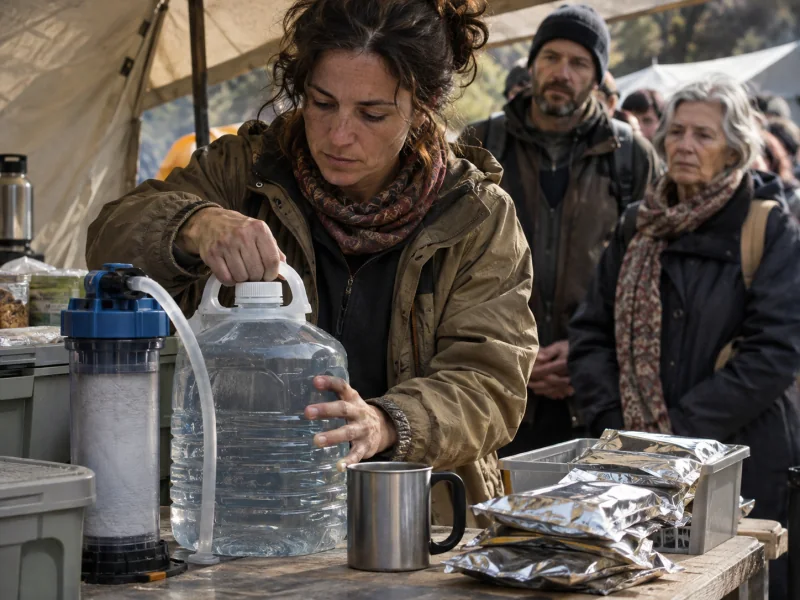
Water, sewer and waste services may fail together during a disaster, but a water outage does not by itself prove that the sewer is damaged. Do not infer toilet safety from the tap, and do not bury, burn or dump waste into storm drains, waterways or open ground on your own. WHO and CDC public-health guidance emphasizes safe water, access to sanitation and preventing human waste from contaminating water. Local public-health or municipal authorities should specify temporary toilets and disposal for local soil, flooding, housing and service conditions.
Check water, sewer and waste services separately
Check current notices from the water utility, municipality and public-health agency; they may cover different services and areas. After a water interruption, verify which toilets, showers, drinking-water points and public facilities are open locally. If sewage backs up, drains overflow, a line is visibly damaged or authorities report system damage, stop testing the toilet or cleaning the area and contact the responsible service.
Reduce nonessential water use and avoid assuming flushing is safe
When water is limited, use local instructions to prioritize drinking, food preparation, care and cleaning. U.S. CDC emergency guidance advises reducing nonessential flushing, laundry and bathing during floods or system damage; local networks and conditions vary, so follow your authority’s notices. If the sewer line is known to be damaged or wastewater has backed up, do not flush, step into the wastewater or let children or pets near it.
Use local plans for temporary toilets and waste
Ask which public toilets, shelter facilities and temporary collection services are operating. Housing, soil, groundwater, flooding and collection conditions can make one method unsuitable elsewhere; do not dig a pit or dump waste into the environment on your own. If authorities issue a household temporary-toilet procedure, confirm its area, required supplies, containment steps and collection location, then follow it. If instructions are unclear, contact local public-health or municipal services.
Plan handwashing and personal hygiene around safe water
Use drinking-quality or otherwise confirmed safe water, soap and a way to collect wastewater according to local public-health advice. Prioritize cleaning hands after toilet use, handling infant waste and before food preparation. If safe water is unavailable, ask health authorities which alternatives apply; alcohol-based hand products do not replace every cleaning task. Keep cleaning equipment separate from drinking-water containers.
Include menstrual, incontinence, infant and accessibility needs
Build the household plan with the people who will use it. Check diapers, incontinence and menstrual supplies, private changing space, transfer assistance and care items. Ask shelters about accessible toilets, lighting, queue assistance, childcare and waste collection; tell the coordinator when something is missing. Do not disclose another person’s health or hygiene needs publicly, or assume that everyone can use the same facility.
Leave sewage exposure and system repairs to qualified help
Wastewater during flooding or pipe failure may contain pathogens and other contaminants. Avoid direct contact; if exposure, a wound or illness occurs, contact local health services and explain what happened. Do not repair a septic tank, electric pump or sewer line yourself, and do not mix bleach, cleaners or other chemicals. After service returns, follow authority instructions for wells, storage and wastewater systems; have damaged equipment checked by qualified local professionals.
Supply links connect this subject to BEIIU categories. They are commercial references, not endorsements by the organizations cited below.
Questions to prepare for
- Check separate notices from water, sewer and waste authorities.
- If sewage backs up or a line is known to be damaged, stop flushing and contact the utility.
- Follow local public-health and municipal instructions for temporary waste handling.
Public references
- WHO · Water, sanitation and hygiene in humanitarian emergencies ↗
- CDC · Guidelines for Septic and Onsite Wastewater Systems ↗
- CDC · Preventing diarrheal illness after a disaster ↗
Preparation notes based on public resources. No independent clinical or technical expert review is claimed. Follow current local guidance.
Editorial standards ↗