Different water advisories call for different actions
Read the local notice; boiling does not fix every contamination.
In immediate danger or with serious injury, contact local emergency services. This article is not live emergency assistance.
After a disaster, tap water can be unavailable or unsafe. Authorities may issue different notices, such as boil-water, do-not-drink or do-not-use advisories; names and scope differ across places. Boiling can address some germs, but it does not remove fuel, toxic chemicals or radioactive materials. U.S. CDC guidance says to use a different safe source and follow health-authority advice when chemical or toxin contamination is suspected. Do not assume marketing for a filter means it handles every contaminant.
Check what the notice says water can be used for
A notice may restrict drinking, cooking, brushing teeth, ice, handwashing or all contact. Do not infer additional permitted uses from the phrase “boil-water notice” alone. Check the authority’s original text, affected locations and update time. An old screenshot does not replace a newer advisory.
Boiling cannot remove chemical hazards
CDC warns that boiling or disinfecting water contaminated with fuel, toxic chemicals or radioactive materials does not make it safe. Avoid using water when such contamination is known or suspected; use a trusted alternative and contact local public-health or water authorities. A household filter only addresses the contaminants and conditions for which it has been tested.
Safe handling also depends on clean containers
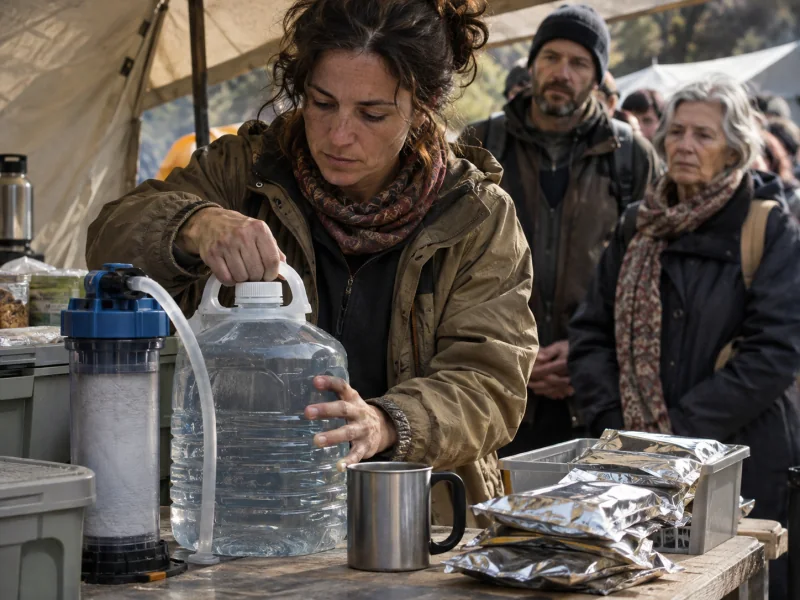
Store safe water in clean containers intended for drinking water, keep them covered and avoid touching the inside with hands or used utensils. Maintain water devices and replace parts according to their instructions. If you cannot confirm that a device addresses the suspected contamination, ask local authorities; product instructions do not replace a public advisory.
Supply links connect this subject to BEIIU categories. They are commercial references, not endorsements by the organizations cited below.
Questions to prepare for
- Check the notice type, affected area, permitted uses and end time.
- Do not rely on boiling or an ordinary filter if chemical or fuel contamination is suspected.
- Follow authorities on safe bottled water, treatment methods and storage containers.
Public references
- CDC · Drinking Water Advisories: An Overview ↗
- CDC · How to Make Water Safe in an Emergency ↗
- CDC · Safe water in an emergency ↗
Preparation notes based on public resources. No independent clinical or technical expert review is claimed. Follow current local guidance.
Editorial standards ↗