Check the home and utilities before returning
Receding water does not mean a building, wiring or water is safe.
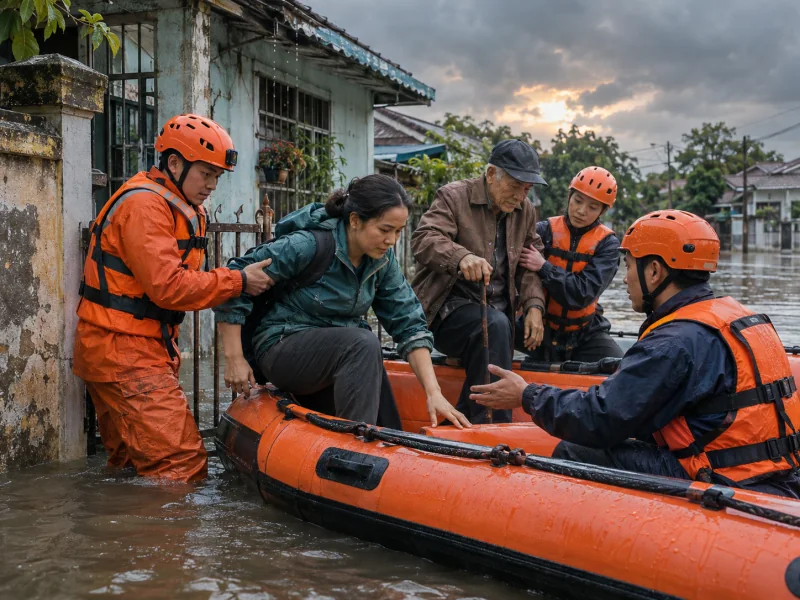
In immediate danger or with serious injury, contact local emergency services. This article is not live emergency assistance.
Flooding can leave sewage, structural damage, electrical hazards and carbon monoxide risks. U.S. CDC guidance says not to enter standing water to reach a power switch; contact an electrician if the switch can only be reached through water. Have the electrical system checked before power is restored. Follow local authorities on building access, electricity, gas and drinking water. This is a return-preparation guide, not a safety inspection of a particular home.
Follow local clearance before returning
A damaged building can have unstable structures, sewage and interrupted services. Check the responsible authority’s reentry arrangements first. Stay clear of downed wires, indoor standing water and possible gas leaks, and contact local authorities. Do not decide on your own that a building is safe to occupy, reconnected power is safe or tap water is drinkable.
Do not treat standing water as a safe place to work
Do not handle appliances, sockets or switches in water. U.S. CDC guidance says to use the main power switch only when it can be reached from a dry location; if access would require entering water, contact an electrician. Follow qualified professionals and the local utility’s instructions.
Check water, food, medicines and cleanup separately
Assess food, medicines and cleaning supplies exposed to floodwater separately; appearance alone cannot confirm safety. If a gas leak is suspected, leave, avoid sparks and contact the local utility or emergency services. Consider whether household members can safely enter before cleanup; children, sick people and those with respiratory risks should not be assigned hazardous cleanup.
Supply links connect this subject to BEIIU categories. They are commercial references, not endorsements by the organizations cited below.
Questions to prepare for
- Do not enter a closed or structurally damaged building without official clearance.
- Do not operate electrical equipment in standing water or touch downed wires.
- Check official guidance on drinking water, food and gas before using them.
Public references
- CDC · Safety Guidelines: Reentering Your Flooded Home ↗
- American Red Cross · Flood safety ↗
- CDC · Drinking Water Advisories: An Overview ↗
- CDC · Keep Food Safe After a Disaster or Emergency ↗
Preparation notes based on public resources. No independent clinical or technical expert review is claimed. Follow current local guidance.
Editorial standards ↗