A night without power
Make room for light, a contact plan and a simple meal.
A power cut makes everyday dependencies visible: phone charging, food storage, light and care that relies on electricity. Start by checking what is already at home before deciding what to add.
Check functions, not just quantities
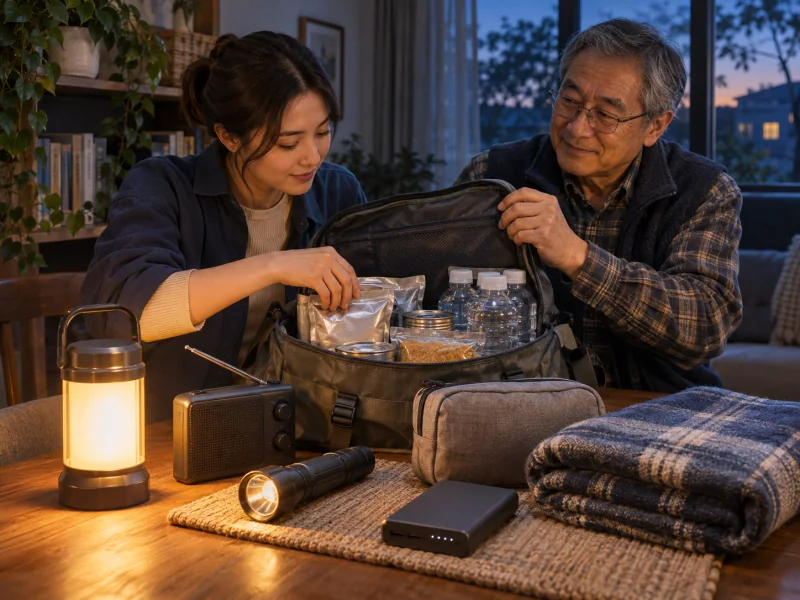
Group needs into light, communication, food and water, and care. Test torches and radios, check charging connectors and note battery sizes. Keep important contacts on paper. Make sure everyone knows where the light is, rather than only knowing that the household once bought one.
Plan for temperature-sensitive needs
Identify powered medical devices and temperature-sensitive medicines, then discuss interruption plans with clinicians, suppliers or pharmacists. Use public-health guidance for refrigerated food rather than judging by smell alone. In extreme temperatures, check whether local cooling or warming facilities are open.
Avoid creating another hazard
Keep camp stoves, charcoal and fuel generators out of rooms, tents and vehicles. Do not improvise unfamiliar electrical connections; damaged equipment needs qualified inspection. Use appropriate battery lighting and follow power-equipment instructions. When electricity returns, review charging, food and care arrangements.
Supply links connect this subject to BEIIU categories. They are commercial references, not endorsements by the organizations cited below.
Questions to prepare for
- Prepare and check battery-powered lighting.
- Keep outdoor stoves and generators out of enclosed spaces.
- Discuss backup arrangements for powered medical equipment with care providers.
Public references
Preparation notes based on public resources. No independent clinical or technical expert review is claimed. Follow current local guidance.
Editorial standards ↗