Build a household water plan
Consider drinking, food preparation and hygiene separately.
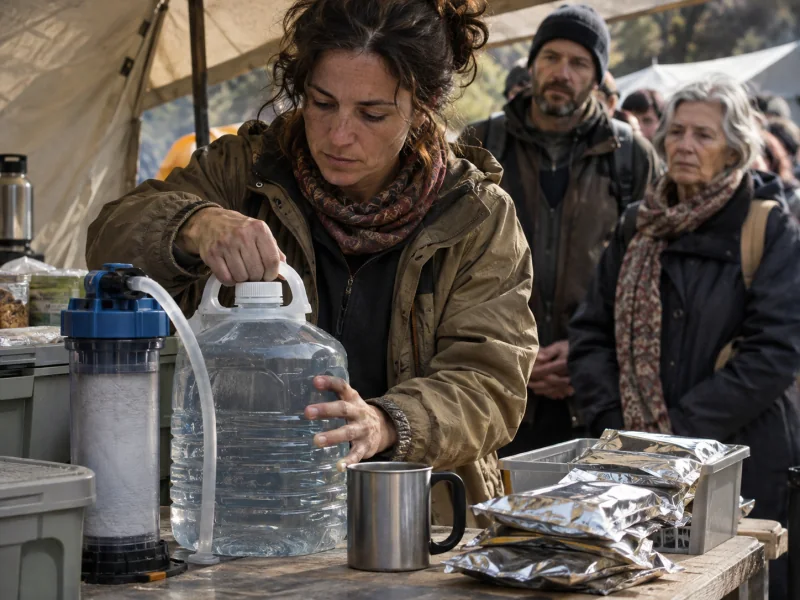
A water plan includes people, local guidance, conditions, sources, containers, storage, rotation and distribution. Current water-safety notices matter more than a product’s promotional wording.
Make a water worksheet
Record drinking and food-preparation needs by person, then list hygiene and care separately. Include individual checks for infants, older adults and medical restrictions. Use local planning advice and ask clinicians about personal fluid restrictions.
Check the storage location
Use clean food-suitable containers and storage instructions, and mark dates. Consider handling, dispensing and cleaning, and avoid locations exposed to flooding or contaminants. Make sure another household member knows the location.
Recheck after a supply change
Clear appearance does not establish safety. Follow the specific local drinking-water, boiling or do-not-use notice. Ordinary filtering and boiling do not address every chemical contaminant; use a reliable alternative and ask the supplier or public-health authority when uncertain.
Supply links connect this subject to BEIIU categories. They are commercial references, not endorsements by the organizations cited below.
Questions to prepare for
- Check current local guidance and household needs.
- Keep the plan where household members can find it.
- In immediate danger, contact local emergency services.
Public references
Preparation notes based on public resources. No independent clinical or technical expert review is claimed. Follow current local guidance.
Editorial standards ↗