When care matters most
A first-aid kit belongs alongside training and professional care.
In immediate danger or with serious injury, contact local emergency services. This article is not live emergency assistance.
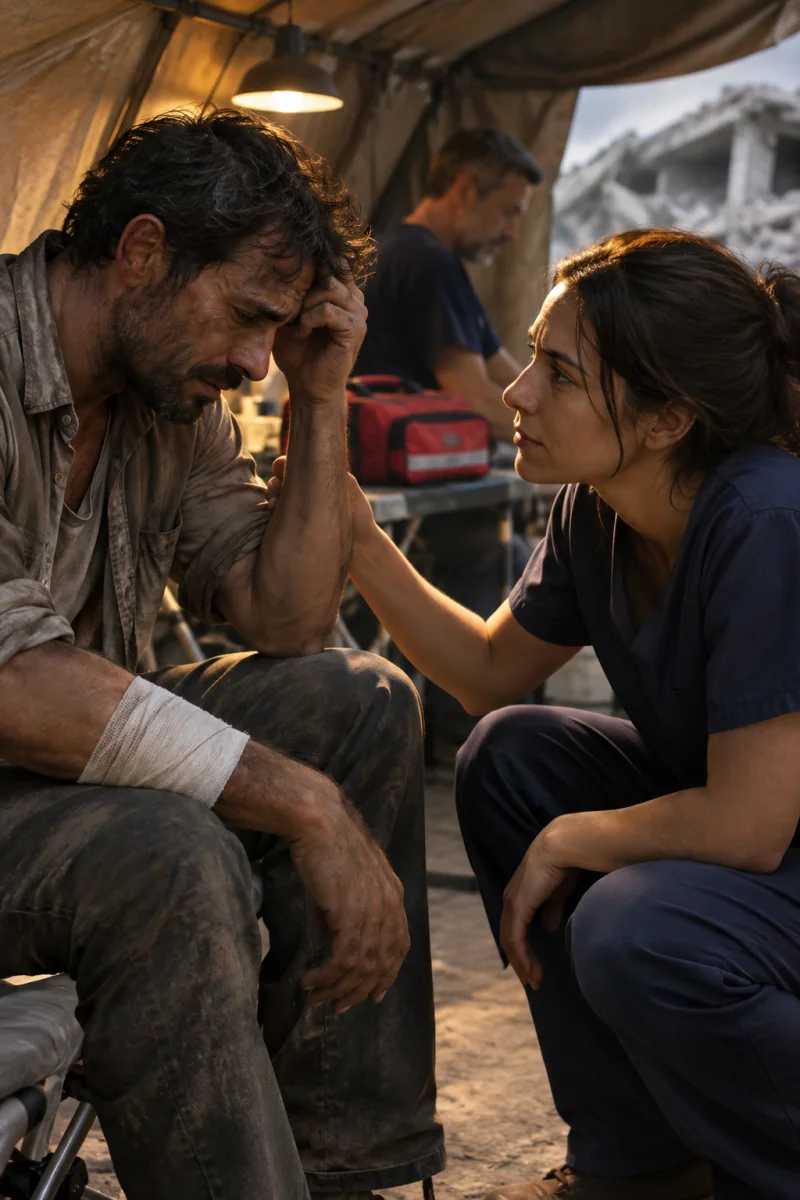
An injured person may experience pain, tension and uncertainty together. This image illustrates care; it does not demonstrate treatment. Serious injury requires local emergency medical help, which should never be delayed by shopping or reading.
Make the kit accessible and understandable
Choose a location the household knows and can access, while preventing unsupervised access by children. Check seals, expiry dates and missing items, and keep instructions. Match contents to health needs and local training rather than assuming that a larger kit is automatically more useful.
Connect professional help early
For serious injury or immediate danger, contact local emergency services. Explain the location, remaining hazards, number of injured people and what can be observed, then follow dispatcher instructions. Photographs, shopping, AI replies or online anecdotes must not delay professional help.
Include training and personal health information
Find recognized local first-aid training and agree who knows the kit location and who can support children or older adults. Keep relevant allergies, medicines, devices and contacts in a suitably private record. This chapter does not provide invasive procedures, dosing or injury-manipulation instructions.
Supply links connect this subject to BEIIU categories. They are commercial references, not endorsements by the organizations cited below.
Questions to prepare for
- Learn how to access local first-aid training and emergency help.
- Check the contents, expiry dates and location of the kit.
- Leave treatment and medicine decisions to qualified clinicians.
Public references
Preparation notes based on public resources. No independent clinical or technical expert review is claimed. Follow current local guidance.
Editorial standards ↗