A family bag you can actually carry
Start with people and tasks before deciding what to pack.
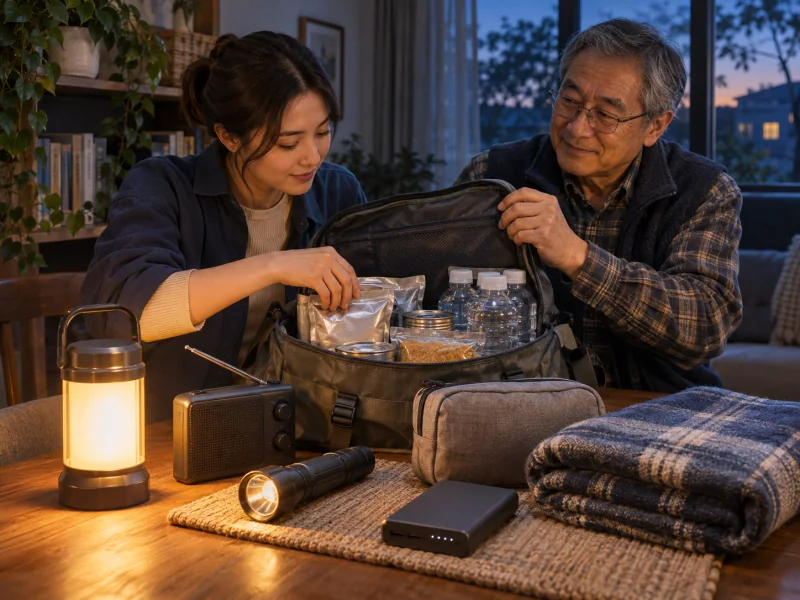
A kit should fit the household. A power cut, a temporary move and an extended stay at home call for different capacity and carrying arrangements. Define the situation, then use local guidance to build the list.
Group items by function
List water and food, light and communication, health needs, warmth, hygiene and documents separately. Check what is already at home. For each item, note who carries it, where it is stored and whether it needs batteries, a connector or an opening tool.
Test the load
Ask the actual user to carry the bag and locate essentials. Older people, children and people with mobility needs may require different arrangements. Separate a carryable go-bag from larger household reserves.
Set a review date
Review dates, packaging, charging, clothing sizes and contacts, and replace used items. Record the locally recommended planning duration and its purpose rather than presenting one country’s quantity as a global standard.
Supply links connect this subject to BEIIU categories. They are commercial references, not endorsements by the organizations cited below.
Questions to prepare for
- Check current local guidance and household needs.
- Keep the plan where household members can find it.
- In immediate danger, contact local emergency services.
Public references
Preparation notes based on public resources. No independent clinical or technical expert review is claimed. Follow current local guidance.
Editorial standards ↗