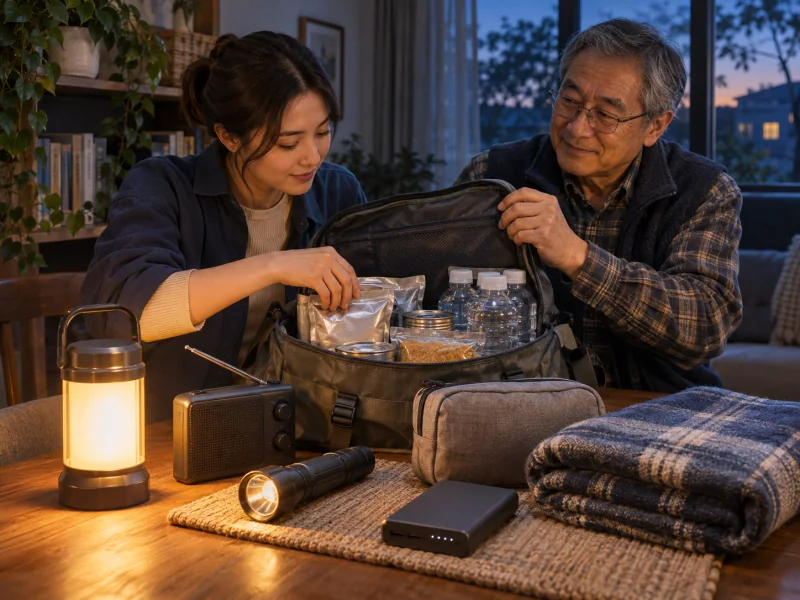
Before leaving a city, agree on destination, routes and meeting points
Agree on a receiving place and backup contacts in advance; use current local access instructions when leaving.

An evacuation plan is not one fixed route. It is an agreement the household can adapt to current conditions. Everyone should know who checks official instructions, whether the destination can receive them, where a backup meeting point is and how to check in if transport fails. American Red Cross and FEMA household materials offer examples for meeting places, out-of-area contacts and route planning; they are preparation tools, not universal evacuation orders. During an actual event, local authority instructions, current access conditions and each person’s mobility take priority.
Confirm what the instruction asks you to do
Check the issuer, affected area, update time and requested action. An evacuation notice may cover only certain districts or specify a meeting point or roads that must not be used. Do not treat an old map, forwarded screenshot or another person’s route as current permission. If the official message is unclear, verify it through the responsible local authority. The absence of a notice does not by itself establish that travel is safe.
Agree who can receive you and where
Contact the relative, accommodation provider or receiving organization and confirm they know you may arrive. Agree on a second place if the first cannot be reached. Choose a household meeting point that does not depend on one building or one person being available. If you plan to use a shelter, verify that it is open and who it can receive; do not assume every site can accommodate pets, care needs or a large household.
Write a primary plan and a fallback
Record a routine primary route, how to check public or accessible transport and where to meet if communications fail. Do not label a road in advance as a guaranteed emergency route; bridges, transit and checkpoints can change. Recheck authority information before departure. If you cannot confirm that a route is open or someone can receive you, pause at a safe, permitted place and verify through official channels.
Make the plan usable by everyone
For children, older people, disabled people, pets and anyone needing continuous care, identify who will accompany them, what transport they can use and which items must remain with them. Include the person in decisions and respect their choices. Write short steps and keep contacts and meeting places on paper. Do not disclose diagnoses, identity numbers or live locations to people who do not need them.
Take what supports initial contact and care
Prepare medication information, glasses or hearing devices, charging options, essential contacts and children’s necessities according to the people travelling. Keep the load manageable for the people carrying it. Do not return to a restricted building or incident area to collect belongings. Storage requirements for devices, batteries and medicines vary; follow manufacturers and local professionals. If someone relies on a life-sustaining device, discuss continuity with care services and the supplier in advance.
Check in on arrival and update the plan
After reaching the receiving place, send the agreed contact a short check-in identifying who arrived and whether help is needed. Do not publicly post other people’s identities or precise locations. Confirm return conditions only after authorities lift restrictions. Afterwards, note which contacts, transport and accessibility arrangements worked, then update the plan as the household changes.
Supply links connect this subject to BEIIU categories. They are commercial references, not endorsements by the organizations cited below.
Questions to prepare for
- Choose two receiving places and one out-of-area contact.
- Include household, pet, accessibility and transport needs in one plan.
- Recheck alerts, route access and the receiving arrangement before departure.
Public references
Preparation notes based on public resources. No independent clinical or technical expert review is claimed. Follow current local guidance.
Editorial standards ↗