Tools you actually know
Familiarity matters more than filling every pocket.
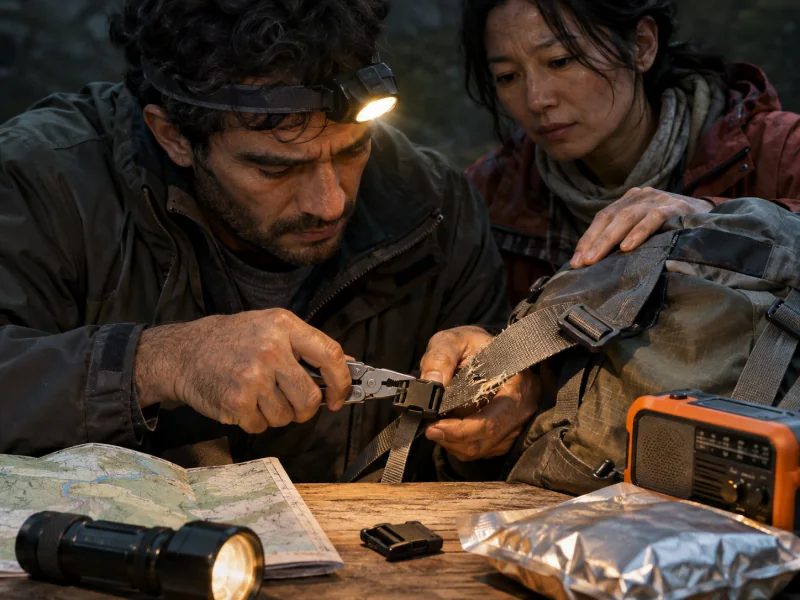
Repairing a backpack strap is a small task, but it is a reminder to inspect and practise. Match tools to their purpose, the user’s ability, maintenance needs and local carrying rules.
Start with tasks
List simple tasks such as lighting, minor equipment repair, opening food packages and organization. For each, check the tool, user skills, instructions and alternatives. More complex equipment can require more training and maintenance; unfamiliar devices are not shortcuts for every problem.
Check carrying and maintenance needs
Check safe storage of sharp parts, compatible batteries and spares, and moisture limitations. Verify local carrying and transport restrictions before travel, especially across borders or by air. Practise in a safe setting rather than learning through hazardous electrical or structural repairs.
Let experience guide replacements
After use, note what helped, what was easily lost and which instructions were unclear. Clean, inspect and restore equipment as directed. Fill specific gaps before expanding the collection; unfamiliar equipment may call for recognized training or a simpler alternative.
Supply links connect this subject to BEIIU categories. They are commercial references, not endorsements by the organizations cited below.
Questions to prepare for
- Choose for the task and read the manufacturer’s instructions.
- Check batteries, spares and wear before departure.
- Do not use unfamiliar equipment for hazardous repairs.
Public references
Preparation notes based on public resources. No independent clinical or technical expert review is claimed. Follow current local guidance.
Editorial standards ↗