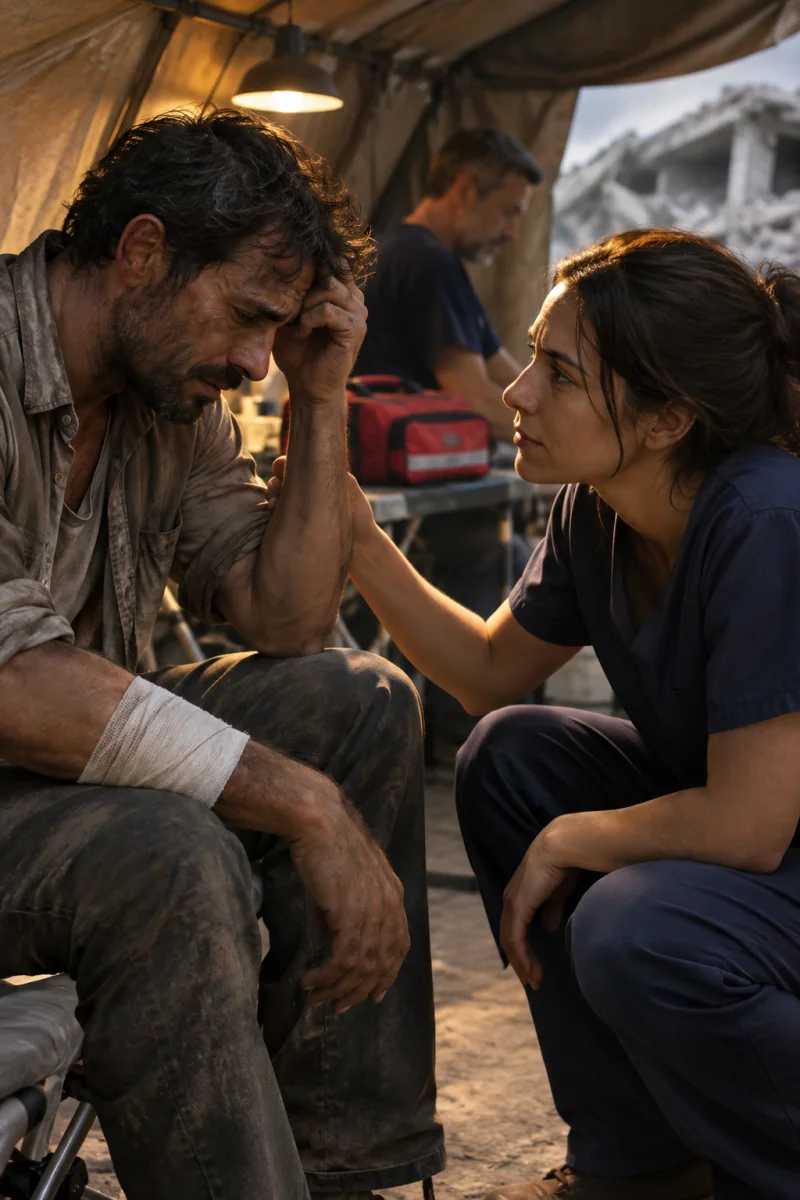
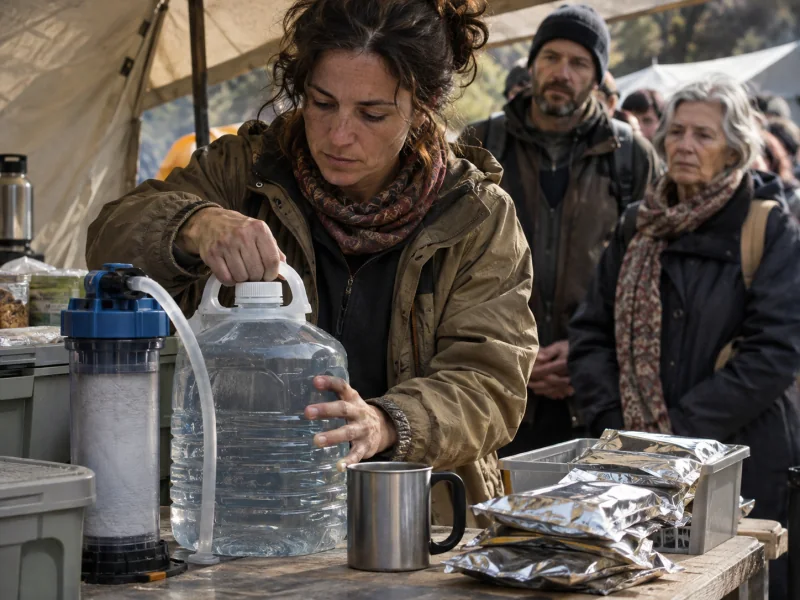
A temporary place to live
Shelter includes light, water and privacy too.
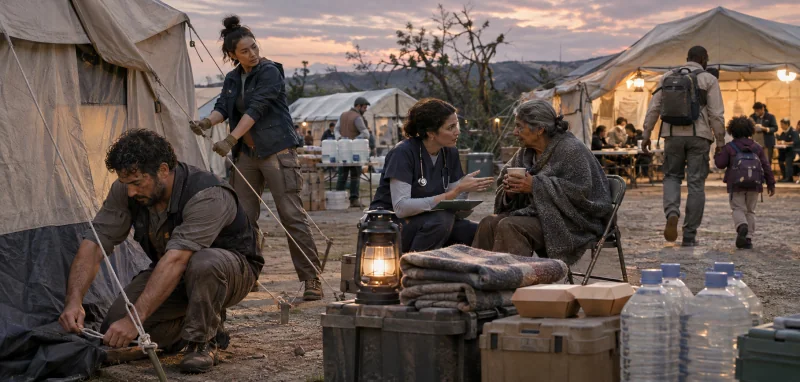
Light after dark, hygiene and care for older people are part of temporary daily life. Shelter choices depend on the site, weather, group and local arrangements, rather than a single tent model for every setting.
Treat shelter as a set of daily needs
Alongside cover, consider water, hygiene, lighting, access, privacy and care. Check registration and management arrangements and explain mobility or communication needs. Keep personal essentials organized so documents are not repeatedly misplaced in shared conditions.
Assess a tent for the actual setting
Capacity, weather, ground, ventilation, setup conditions and local arrangements all affect suitability. Review actual specifications, components, maintenance and safety instructions rather than a promotional photograph or capacity label alone. Institutional purchases also need inspection, training, spares and delivery documentation.
Plan for care after dark
Consider lighting and access for older adults, children and people with mobility needs at night. Explain contact and meeting arrangements without exposing precise shelter locations publicly. Keep outdoor combustion stoves out of tents and enclosed spaces. Verify changes with the site’s management.
Supply links connect this subject to BEIIU categories. They are commercial references, not endorsements by the organizations cited below.
Questions to prepare for
- Check official registration and shelter arrangements.
- Plan for privacy, accessibility and hygiene.
- Keep supply lists and family contacts accessible.
Public references
Preparation notes based on public resources. No independent clinical or technical expert review is claimed. Follow current local guidance.
Editorial standards ↗