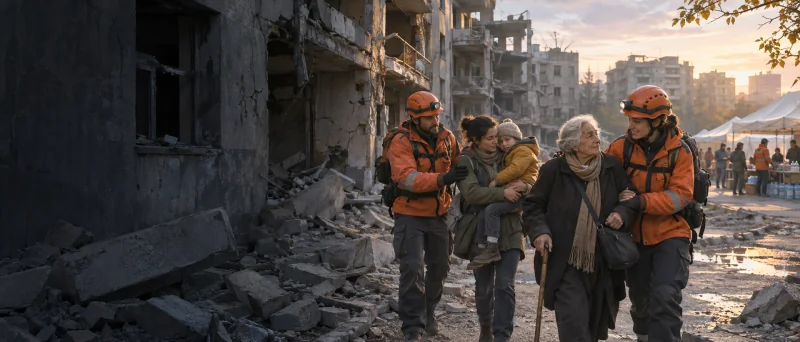
On the first night at a temporary shelter, confirm the basics
Find staff, water, toilets, exits and the information point before planning the next step.
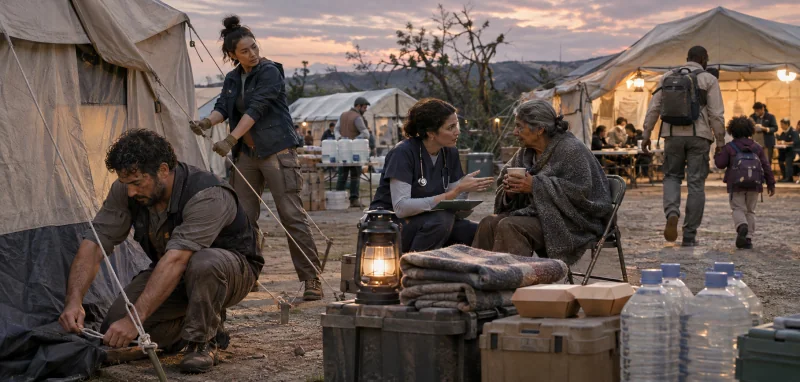
Services, eligibility and space differ by location. On arrival, a household needs to know who provides information, how to register, which facilities are available and how to raise care needs privately. Sphere humanitarian standards emphasize protection, participation and dignity in context; they are a planning reference, not a service list for a particular shelter. Do not assume every site provides medicines, pet space, charging, interpretation or clinical care. Seek local emergency help first for immediate danger or serious injury.
Find the staff who can confirm information
On arrival, find out who handles registration, household check-ins, separated people and updates. Ask where the information point is, when updates occur and how interpretation is arranged. Do not rely only on a volunteer’s verbal relay or a group-chat screenshot. If an instruction is unclear, ask staff to repeat the area and time it applies to.
Locate drinking water, toilets, handwashing and exits
Locate drinking water, open toilets, handwashing, night lighting and accessible routes. Ask how waste and hygiene materials should be handled; do not put items into toilets or drains unless site rules explicitly allow it. Keep main exits and emergency routes clear; do not stack bags near doors. If a facility is unusable, tell staff and ask about alternatives.
Share specific needs privately with responsible staff
With the person’s agreement, explain mobility or communication support, food allergies, infant care, menstrual supplies, pets, medicine storage or charging needs. Share only what is needed to arrange support; do not disclose records or identity details to others. Ask whether staff recorded the request, when they will respond and whom to contact if a service is unavailable. Registration does not guarantee resources will be available.
Agree on sleeping space and privacy
Ask staff how sleeping spaces, child supervision and quiet hours are organized, and where people can change, wash or speak privately. Do not photograph residents, name boards, children or assistance lists, or share someone’s story or image without permission. If someone feels unsafe, contact the designated protection staff without broadcasting details and ask how the concern will be handled confidentially.
Make sure the household knows how to reconnect
Choose an easy-to-describe meeting point inside the site and one contact. Find out which staff member handles separations instead of searching the site alone. Write down key details while protecting children’s privacy. Agree on the next check-in time and a backup if phones fail. Do not block exits or leave to search for someone unless staff and local directions confirm it is safe.
Make a short list for the next day
Note unresolved questions about water, medical support, transport, family contact, medicine storage or accessibility and which staff role can follow up. Separate confirmed information from items still being checked. Services and opening times can change, so review official updates in the morning before travelling. Keep essential documents and supplies accessible without moving everything at once. Rest supports clear decisions; seek local medical or emergency help promptly for an urgent health problem.
Supply links connect this subject to BEIIU categories. They are commercial references, not endorsements by the organizations cited below.
Questions to prepare for
- Ask staff about registration, exits and update channels.
- Raise accessibility, diet, privacy and care needs privately.
- Keep routes clear and follow the site’s safety arrangements.
Public references
Preparation notes based on public resources. No independent clinical or technical expert review is claimed. Follow current local guidance.
Editorial standards ↗