Coordination above the rubble
Heavy equipment depends on professional judgment.
In immediate danger or with serious injury, contact local emergency services. This article is not live emergency assistance.
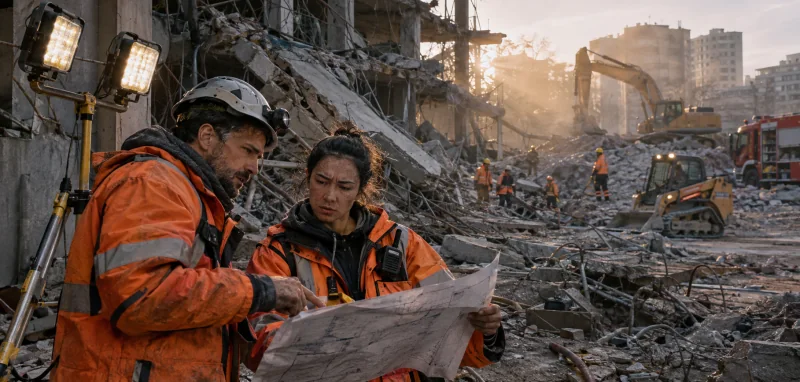
Search-and-rescue brings engineering, medicine, lighting and information together. Supporting a response differs from entering an unstable structure or operating machinery. Competent teams need to lead technical work.
Clarify the role before helping
In rescue support, transport, receiving supplies or information work, clarify coordination, communication and permitted areas. Willingness to help does not establish competence in structural assessment, machinery or technical rescue. Explain your training and limits before accepting a task.
Record conditions of use alongside equipment
Lighting, communications, protection and machinery need suitable people, power, maintenance and site conditions. A procurement brief should include the environment, applicable standards, inspection and training requirements. Professional site judgment takes priority over a general equipment description.
Make handover information usable
Support records can include leads, tasks, supply batches, completed work and unresolved questions. Keep injured people’s identities and unverified rescue conclusions off public channels. At a handover, confirm understanding rather than expecting the next person to infer missing details.
Supply links connect this subject to BEIIU categories. They are commercial references, not endorsements by the organizations cited below.
Questions to prepare for
- Respect controlled zones and responder instructions.
- Do not enter damaged buildings before safety clearance.
- Clarify roles and communication before assisting.
Public references
Preparation notes based on public resources. No independent clinical or technical expert review is claimed. Follow current local guidance.
Editorial standards ↗